
Foraging in the context of biodiversity crisis
Some findings from my PhD

Having recently written a post expressing my love of nettles, I received a comment by Daniel Martin Ekhart (storyteller on rewilding) saying: “Foraging is wonderful if done mindfully”. He makes an excellent point - and it inspired me to write something on the the topic.
One of the main arguments of my recently published thesis, was that foraging can be beneficial, as it promotes an understanding that caring for the self is intertwined with caring for the other. It helps us realize, in a tangible way, that human health and ecosystem health are one and the same. It gets us to notice what’s around us - learn about other species, and to connect.
Yet, I also argued that it can be a threat to the ecosystem balance - if we take too much, then we can damage the populations of wild foods. We are in the state of biodiversity crisis here in the UK, so how we relate to the other species we live alongside is integral. When commercial foraging is concerned, wild foods can be picked too rapidly and without the necessary care. This is not to say that some companies work with best practice principles and do a great job, as they value sustainability. Yet, when economic value becomes the only way humans relate to another species then damage is likely. This, of course, echoes the age of story of how humans relate to nature - time and time again, the extractive mindset of capitalism can lead of over-harvest and overconsumption.
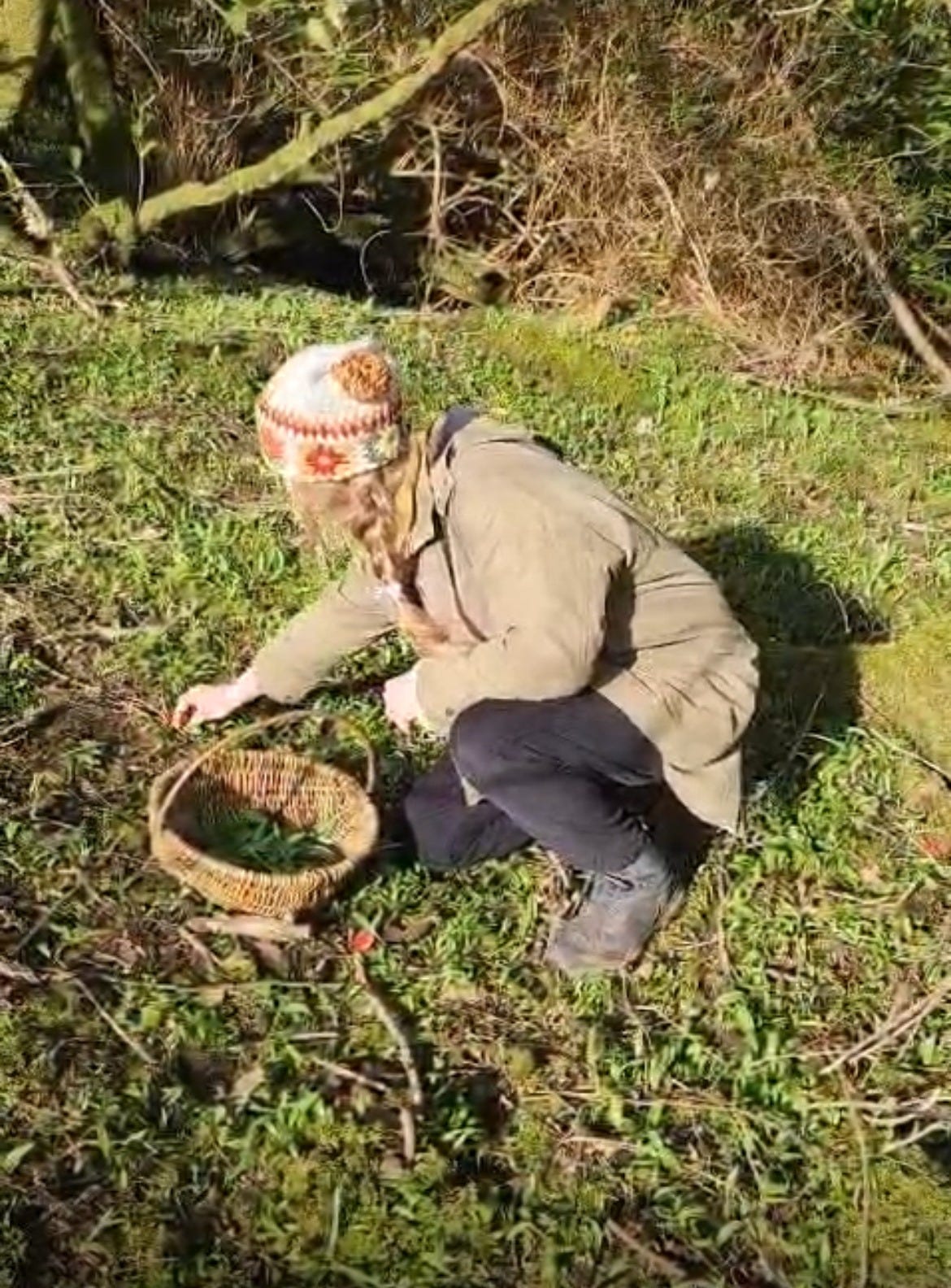
However, to avoid this mindset creeping in, professional foragers teach principles that guide people to act with care and to develop a sustainable practice. Here are a few principles that I gleaned from talking to about 40 different experts during my PhD research about best practice foraging:
Monitor: Examine the overall health of the ecosystem and species you wish to forage in a particular area before deciding whether to harvest. Will the amount you require for your harvest negatively impact the population, or is there plenty?
Build Relationships: Develop a relationship with a local area, and your local populations of wild foods, to be able to notice changes and the health of the population.
Harvest with humility: Be prepared to go home with nothing! Always leave plenty behind.
Rewild the landscape: Find out how to harvest a species in a way which might stimulate new growth, like just pinching off the top of nettles. Think about propagating wild foods in your garden, or sow the seeds of a wild food plant to help it spread on your way home.
Be aware of conservation statuses and biodiversity: Never harvest a rare species…even if it the most delicious off all things!
As the Association of Foragers explain, “we teach that the interests of foragers and the species that they forage are aligned, and that foraging should always be carried out in ways that do not compromise future species populations or the biological communities of which they are a part.”
Following these principles, foraging can help us to attune to our local landscape and to notice other species in a new way. Yet, none of this possible without access to land. If the public can only access a small portion of the countryside then damage through foraging is more likely. In my thesis, I suggest that land managers might integrate foraging and the practices of attentiveness, and monitoring, into their strategies - inviting more people to spend time and learn on their land - more citizen science projects involving foraging. Thinking about making land ownership and access fairer was not the remit of my thesis, but it was mentioned - and is definitely a key part of making foraging a sustainable practice.
Food for thought, eh?
Best wishes, Dr Laurie!
Great piece and looking forward to reading your thesis! 👏🏼
These are super easy to follow principles - it would be great if they were somehow turned into standards for practicing foraging. People don’t realise that while some things can be foraged fully like wild leek or chicken of the woods, we need to leave other things behind like wild garlic and brambles. Great article!